How to Prepare a Reactive Dog for Doorbells, Costumes, and Halloween Visitors

Preparing a reactive dog for the unique challenges of Halloween requires a structured approach rooted in science-backed dog training and real-world experience. For families in Northern Colorado and beyond, helping a dog remain calm through doorbells, costumes, and sudden visitors is essential for safety, comfort, and long-term behavior improvement. At LifeStyle K9, we specialize in personalizing this process, ensuring each dog’s reactivity is addressed with a combination of management, positive reinforcement, and owner partnership.
Successfully preparing a reactive dog for Halloween involves more than just hoping they adjust. It demands preemptive management to reduce stressful triggers, systematic training to create desirable behaviors, and realistic strategies for the busy, unpredictable nature of the holiday. Families should start preparations well before Halloween night for the best results, focusing on setting up the environment, practicing station skills, easing into costume exposure, and establishing protocols for visitors. The risks of not planning ahead can include significant stress for your dog, potential bites, and a holiday experience that is chaotic for everyone involved. By implementing the step-by-step approach outlined here and leaning on expert support, you set your dog up for success and keep your household safe and calm when Halloween arrives.
What is a Reactive Dog and Why Halloween is Challenging
A reactive dog is one that responds to triggers in the environment with heightened emotional or physical responses, including barking, lunging, or retreating. Common triggers include doorbells, unexpected guests, movement, and unfamiliar appearances—all of which are prevalent on Halloween.
- Doorbells and knocking can quickly overstimulate sensitive dogs, signifying an unknown intruder or interruption.
- Costumes and masks make people’s appearances unpredictable and sometimes frightening for dogs who rely on visual cues for recognition.
- Continuous waves of visitors prevent dogs from settling between episodes, leading to constant arousal and an increased risk of reactive incidents.
For households with dogs that have a history of fear, reactivity, or aggression, prioritizing safety and training before attempting to integrate pets into Halloween festivities is critical. Management always takes precedence over forced exposure.

Step-By-Step Preparation Framework
Step 1: Environmental Management—Reduce Triggers Before You Train
- Silence the doorbell, or disconnect it temporarily. Ask visitors to text or knock softly instead.
- Place a secure barrier—such as a baby gate, crate, or closed room—between your dog and the entryway before the first trick-or-treater arrives.
- Block visual access to high-traffic windows or doors if your dog reacts to people outside.
- Prepare high-value treats and interactive toys near the dog’s station to quickly reward relaxed behaviors.
- Inform visitors (friends and family) in advance not to interact with your dog unless you invite them to and your dog is truly calm.
For some dogs, setup is all that’s needed. Many families under the guidance of LifeStyle K9 have found that simple management—putting the dog in a calm, secure zone away from the excitement—can completely prevent unwanted behaviors on Halloween night.
Step 2: Teach and Generalize a Calm Station or "Place" Behavior
Station training means creating a predictable, rewarding spot (such as a mat, dog bed, or crate) where your dog knows they can settle during stimulating events.
- Start when the home is quiet. Lead your dog to the station and reward them for any interest or calm posture.
- Add a cue (“bed” or “place”), rewarding your dog for remaining there quietly. Build duration gradually, increasing time only after repeated success.
- Teach a release or “all done” cue to clarify when your dog’s job is finished.
- With LifeStyle K9’s support, transfer these skills into real-life scenarios—first without distractions, then gradually adding small ones (footsteps, door sounds, etc.).
- Practice until your dog responds automatically, without needing to be physically guided.
Proofing the skill for Halloween means your dog associates their station with comfort, even as things get noisier outside the door.
Step 3: Doorbell Desensitization and Counterconditioning
When dogs react to the doorbell, it’s typically because it predicts excitement, chaos, or strangers. With desensitization, the bell’s sound is made less intense and paired with something positive.
- Record the doorbell and play it at very low volume while your dog relaxes. Immediately offer a high-value treat after every ring.
- Repeat short sessions throughout the week, slowly increasing volume only if your dog continues to eat treats and remains relaxed.
If your dog freezes, barks, or can’t take food, lower the volume or increase distance from the sound source. A calm, food-motivated dog is a sign you’re working at the right level.
Step 4: Pairing Doorbell with a Desirable Behavior
Once your dog is less reactive to the bell’s sound, introduce the next sequence:
- Doorbell rings, cue the station behavior, deliver several treats in place, and allow your dog to relax as the visitor enters (behind a barrier/door if possible.)
- If your dog looks at you after the bell, immediately reward this eye contact—this “check-in” is an alternative to barking or bolting.
This pattern, taught with LifeStyle K9’s stepwise approach, gives your dog a clear job during overstimulating moments, replacing unhelpful habits with positive ones.
Step 5: Practice with Costumes Before the Holiday
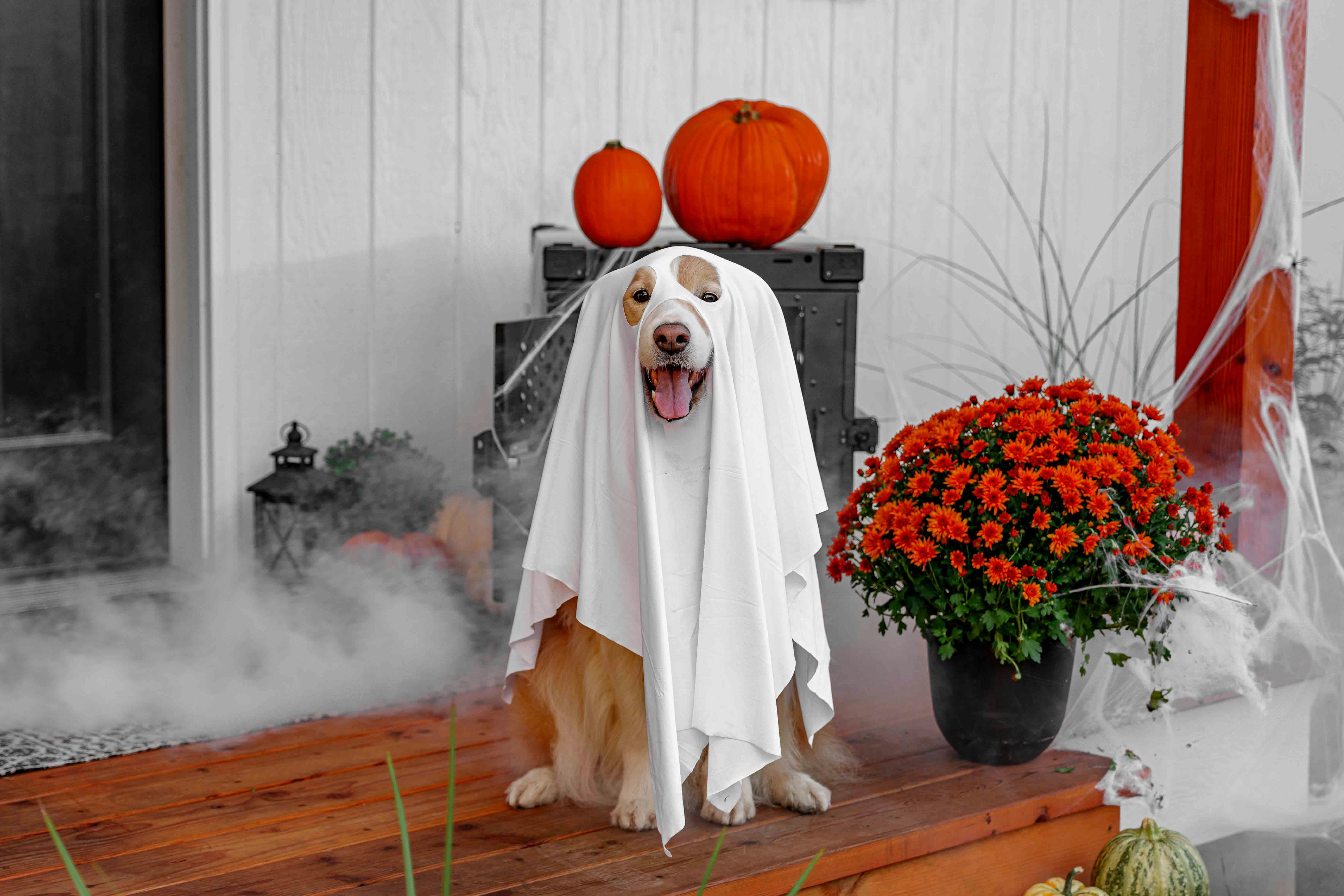
Costumes radically alter human appearance. Even familiar people dressed differently can become strange to your dog.
- Start by introducing one familiar person wearing an unusual item—like a hat or glasses—at a safe distance.
- Reward calm or curious glances with treats.
- Gradually add more costume elements and gentle movement, always monitoring your dog’s stress level. If your dog seems unsure, simplify the setup or add more distance.
- For families in the Fort Collins area, LifeStyle K9 offers hands-on help to stage these scenarios in your home, ensuring safe, positive exposures.
Don’t wait until Halloween night. A few short, positive dress-up sessions can have a big impact on your dog’s comfort.
Step 6: Day-Of Strategies for Trick-or-Treat Traffic
- Before festivities begin, provide a long-lasting enrichment toy (such as a food puzzle or chew) to occupy your dog in their station or safe zone.
- Keep your dog behind a barrier (crate, gate, or separate room) when opening the door to trick-or-treaters. Many families simply choose to close their dog away during the busiest periods for maximum safety.
- Use the station cue each time the doorbell rings. If your dog remains calm, reward them after each visitor departs.
- Remind guests to ignore the dog until you invite interaction and your dog is demonstrating calm body language.
- Watch for signs of rising arousal: if your dog begins to struggle, increase the distance from the door or take a break away from the entryway.
In cases where dogs escalate despite training, the LifeStyle K9 team emphasizes returning to management. Protect your dog’s emotional state and your household by choosing safety first.
Real Case Example: Solving Door and Visitor Reactivity with Individualized Training
In one of our local Fort Collins success stories, two dogs (Asher and Benson) were prone to demand barking and escalating excitement at the sound of visitors. The long-term solution combined behavior modification, station training, enriched routines, and a customized “place” command—reinforced both during training sessions and in real visitor scenarios. Consistent reinforcement of calm behavior and avoiding accidental rewards for barking were pivotal. This approach reflects the exact principles LifeStyle K9 applies when addressing Halloween-specific visitor challenges.
For more on demand barking and visitor reactivity, see: Turning Begging Into a Win and What to Do When Your Dog Barks and Lunges on Walks.
Best Practices for Halloween with a Reactive Dog
- Prepare days ahead by practicing with the doorbell, visitors, and costumes.
- Err on the side of caution: use barriers, crates, and stationing even if your dog seems calm. One mistake on a busy holiday can have lasting effects.
- Choose one consistent station behavior. Don’t try to switch locations or routines at the last minute.
- Practice in small increments. Multiple short, stress-free rehearsals beat one long and overwhelming experience.
- Reinforce calm with high-value rewards and calm praise—preferably items that take time for your dog to consume.
- Ask all household members and visitors to maintain your training plan, not break the rules for "just one treat" or impulsive contact.
- Be aware of warning signs: if your dog is unable to take treats, pants heavily, or cannot settle despite management, further simplify the setup and plan to revisit training post-holiday.
Busy families concerned about their dog’s well-being—and the safety of Halloween visitors—are encouraged to schedule a meet and greet or consult with the LifeStyle K9 team for custom strategies and ongoing support.
Frequently Asked Questions
What if my dog starts barking or lunging before I can cue their station?
Move your dog away from the door, create distance, and use a barrier or crate if needed. Reward the first moment of calm silence, even if short-lived. Avoid yelling or repeated corrections, which can add stress and escalate the situation further. Many families find that pre-setting barriers and rehearsing the sequence daily prevents escalation on the big night.
Is it ever safe to allow a reactive dog to greet trick-or-treaters?
In most cases, a dog with a history of reactivity, fear, or aggression should not greet Halloween guests. Safety is the priority. If you want your dog to participate in the festivities, consider dressing them up for a controlled photo away from the door or offering special treats in their safe area instead.
How early should I begin training before Halloween?
Starting at least a week in advance allows you enough time to implement environmental management, introduce the station behavior, work on desensitization, and practice with costumes. However, earlier is always better—especially if your dog’s reactivity is moderate-to-severe.
What are signs my dog is too stressed or “over threshold”?
Common signs include refusal of treats, frantic pacing, excessive barking, drooling, inability to settle, or sudden, aggressive behaviors. These indicate your dog needs less stimulation and more distance from the trigger. In these cases, pause training and consult a professional for next steps.
How do I maintain progress after Halloween?
Continue practicing station cues, controlled visitor greetings, and doorbell exposures in everyday situations. LifeStyle K9’s in-home and virtual training services ensure families have support for consistent progress long after the holiday ends.

Conclusion: Confidence for Every Family and Every Dog
Halloween presents unique challenges for reactive dogs and their families. By taking a proactive, step-by-step approach—rooted in management, positive reinforcement, and practiced routines—you significantly reduce the risks and create a more peaceful experience for everyone. At LifeStyle K9, our real-world, expert-driven programs are designed around your dog’s needs, your home, and your schedule. For busy professionals and families across Fort Collins, our personalized consultations, in-home training, and enrichment visits provide the expert-level support required for lasting change.
If you’re ready for calm holidays and confident visits year-round, schedule a free consultation with our team or explore more practical solutions in our blog, including How to Help Your Dog Stay Calm When Summer Schedules Change and How Focusing on Your Dog’s Good Behaviors Accelerates Training Success. Let’s turn Halloween from a struggle into a success—for you and your dog.